
The Battle Against Rust is Over
A billion EURO problem with a seamless solution
LASER CLEANING AND RUST REMOVAL BY LASER
Fast and selective laser cleaning of corroded surfaces
In modern metalworking, the removal of rust and oxidation is crucial to ensure the service life and functionality of components. One of the most innovative technologies in this area is laser rust removal. This method offers numerous advantages over conventional processes and is becoming increasingly established in the industry.
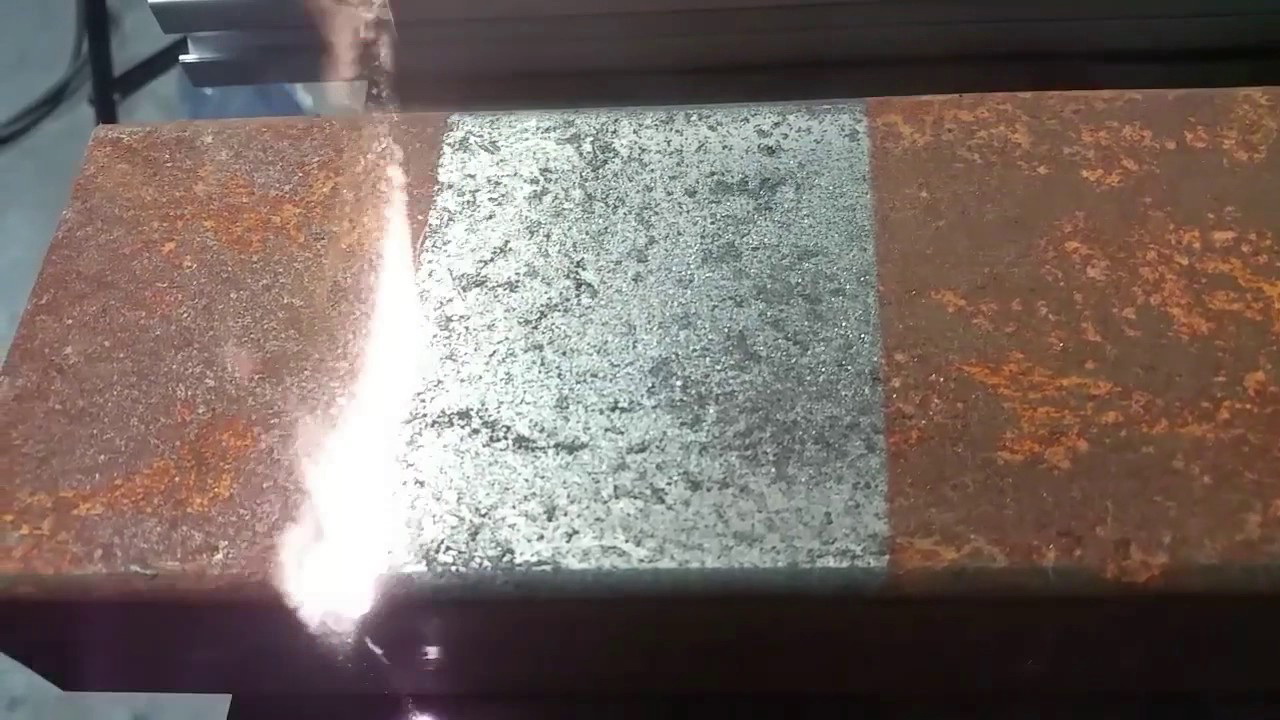
Laser derusting is a process in which high-intensity laser beams are used to remove rust, oxidation, and other contaminants from metal surfaces. The laser beam is directed precisely at the affected areas, causing the unwanted layers to be vaporised or removed by the high temperature. This is done without the use of chemical agents or abrasive materials, which significantly reduces the environmental impact.
Laser rust removal, a type of laser cleaning, is an effective process for cleaning up metal parts. Using a fiber laser cleaning system, rust and other contaminants can be quickly and completely removed without damaging the metal underneath. Laser rust removal is a great alternative to manual and chemical cleaning methods since rust is removed with greater precision and lower recurring costs. It’s also a great way to reduce your environmental impact.
The removal of rust and oxide layers from metals is a laser cleaning application that is gaining very fast popularity due to the speed and flexibility that it offers. The process of removing rust from a metal appears to be the same as removing a painted layer, but there is a key difference. Rust and oxides are able to chemically corrode the bulk material, pitting and penetrating such that they are not just present on the surface. To fully remove high levels of rust, it is necessary to also engrave a thin layer of the substrate. The important takeaway is that the laser parameters needed to efficiently remove surface rust are not the same (in fact, practically opposite) as the parameters needed to best remove penetrating rust.
Laser derusting is a revolutionary method of removing rust and oxidation that is both environmentally friendly and efficient. As laser technology continues to develop, this method will become even more important in metalworking. Companies looking for innovative solutions to improve their production processes should consider laser rust removal to increase their competitiveness while being environmentally conscious.

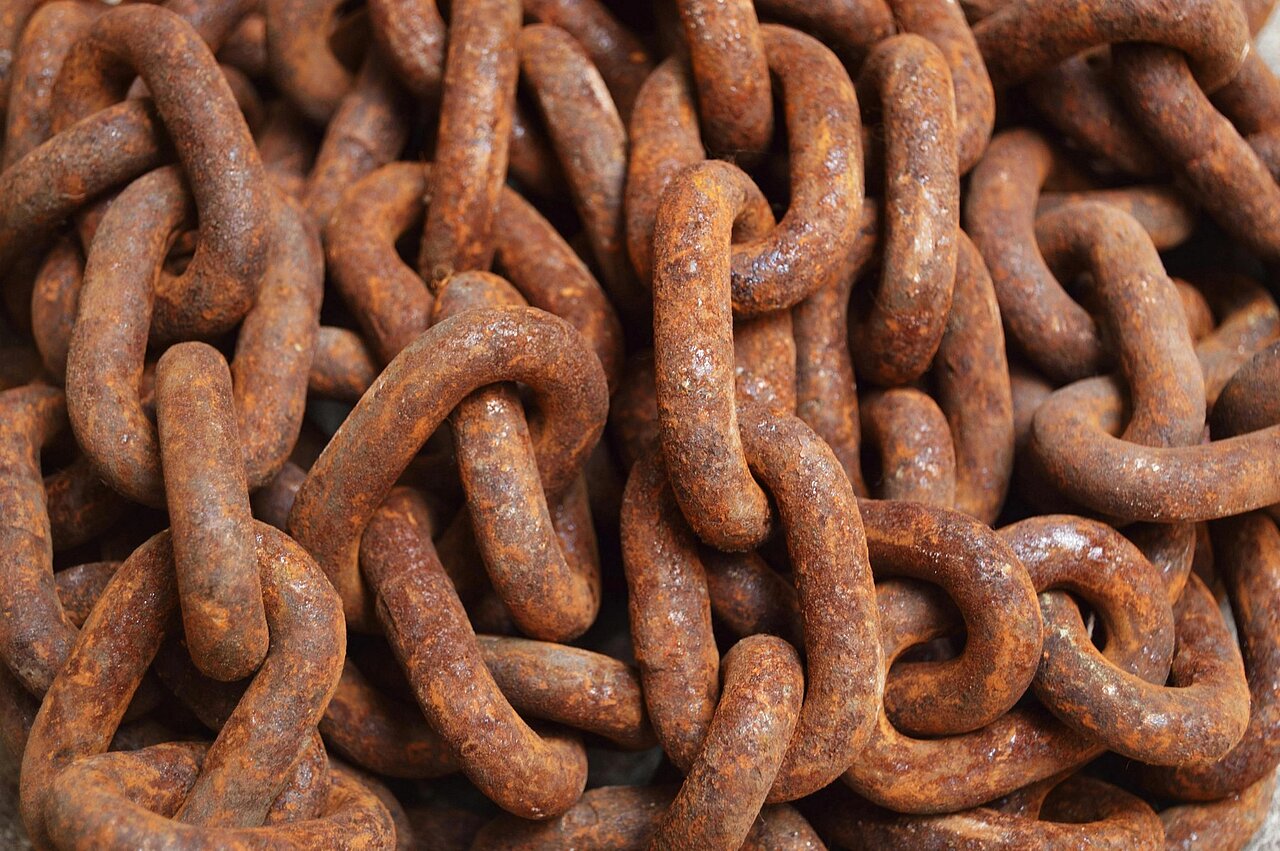
Rust and Rust creation
During oxidation, two oxide layers are produced,
at the surface Fe2O3 (thickness ≈ 20 nm) and in depth Fe3O4 (thickness ≈ 1000 nm or more).
The oxide layer exhibits a quite rough surface:
Its thickness is inhomogeneous (±100 nm around its mean value), and the lateral size of the grains is around 1 mm.
What Is Laser Rust Removal?
Laser rust removal, otherwise known as laser ablation, is a process that leverages the power of laser beams to clean and remove rust from metal surfaces.
It operates by directing short, intense bursts of laser light onto a rusted area.
The laser energy is absorbed by the rust layer, causing it to heat up and vaporize or be blown off, leaving behind a clean metal surface.
Unlike traditional methods, laser cleaning is non-contact, precise, and can be finely controlled.
How Does Laser Rust Removal Work?
Laser rust removal uses a technique called laser ablation. This process involves directing a laser beam at the rusted surface, which causes the molecular bonds in the rust to break down and the material to be vaporized and ejected. Because each material has a specific ablation threshold or energy required to initiate this process, lasers can be fine-tuned to remove rust without damaging the underlying metal. This selective ability ensures that only the rust is removed while the metal stays intact.
The efficiency of laser rust removal is further enhanced by using pulsed fiber lasers. These lasers emit high-energy bursts in very short durations, allowing for faster and more efficient cleaning. These bursts of power increase the removal speed and prevent the underlying material from overheating, which could cause damage. The adaptability of laser cleaning means it can be used on various contaminants, not just rust, making it a versatile tool for industrial applications.
Laser rust removal is known for its environmentally friendly, consumable-free process, which does not include harsh chemicals or mechanical abrasion. In fact, laser rust removing is also safe for operators, as the process typically adheres to international safety standards and does not require harmful chemicals. This makes laser rust removal a cost-effective, versatile, and environmentally sustainable solution for maintaining and restoring metal surfaces.
Why Choose Laser Rust Removal?
Laser rust removal offers several significant advantages over traditional rust removal techniques.
Precision and Control: Laser rust removal can be finely controlled to remove rust without affecting the underlying metal. This precision makes the technology suitable for delicate and high-value components.
Eco-friendly: Laser cleaning does not use abrasive materials or chemicals, reducing the environmental impact. There is no need to dispose of hazardous waste, making it a cleaner alternative.
Non-contact Process: Laser rust removal is a non-contact method that reduces the risk of damaging the metal surface. This is particularly advantageous for preserving the dimensions and integrity of the cleaned parts.
Safety: The process can be safely contained, with minimal risk to operators compared to methods involving chemicals or high-pressure abrasives.
Cost-effective: Over time, the efficiency and reduced need for consumables make laser rust removal a cost-effective solution.
Versatility: It works on various metals and can be used in different industries, from automotive to aerospace.
Applications of Laser Rust Removal
Laser rust removal finds applications across numerous industries due to its versatility and precision.
Automotive Industry: In the automotive industry, laser cleaning prepares surfaces for painting and coating, ensuring the adhesion of protective layers. It is also employed in restoring vintage cars by delicately removing rust without damaging the underlying metal.
Aerospace Industry: In aerospace, components must meet stringent standards. Laser cleaning is ideal for maintaining these parts, as it does not compromise structural integrity while providing thorough rust removal.
Manufacturing and Fabrication: Laser cleaning benefits manufacturing processes by maintaining clean and rust-free tools and molds. This leads to higher-quality products and an increased lifespan of equipment.
Restoration and Conservation: For restoring historical metal artifacts and sculptures, laser cleaning offers a gentle approach that preserves the artifact's integrity and aesthetic value.
Marine Industry: Ships and offshore structures are prone to rust due to constant exposure to moisture and salt. Laser rust removal provides an efficient way to maintain these structures, reducing maintenance time and costs.

Rust Removal
Corrosion, rust, and oxides cause significant damage and drastically shorten the life and performance of parts and equipment.
Laser rust removal is a faster and greener alternative to sandblasting and chemical removal methods since it completely removes rust and corrosion to the bare metal without altering the integrity of the metal itself. Our quick setup and breakdown time, make laser rust removal the perfect solution for restoration and maintenance of parts and equipment.
In modern metalworking, the removal of rust and oxidation is crucial to ensure the service life and functionality of components. One of the most innovative technologies in this area is laser rust removal. This method offers numerous advantages over conventional processes and is becoming increasingly established in the industry.
Laser derusting is a process in which high-intensity laser beams are used to remove rust, oxidation, and other contaminants from metal surfaces. The laser beam is directed precisely at the affected areas, causing the unwanted layers to be vaporised or removed by the high temperature. This is done without the use of chemical agents or abrasive materials, which significantly reduces the environmental impact.
We offer manual solutions for small quantities as well as for the production of large and very large quantities with automated systems.
Indicational Surface Cleaning capacity for each laser power
This are only indicational values for Reference, based on our own experience, each case must be checked specific and results depend on the layers and the underground
| Surface cleaning indicational capacity | layer thickness | 120W | 220W | 320 W | 540W |
| Oxide Layer or coated surface | m²/h | m²/h | m²/h | m²/h | m²/h |
| <25µm | 5,5 | 9 | 12 | 15 | |
| <50µm | 3 | 5 | 7 | 8,5 | |
| >50µm | 2 | 3,5 | 4,5 | 6 | |
| Rusty Scale | m²/h | m²/h | m²/h | m²/h | m²/h |
| <50µm | 3 | 6 | 8 | 12 | |
| <100µm | 2 | 3 | 4 | 6 | |
| >100µm | 1 | 1,5 | 1,9 | 2,8 |
