

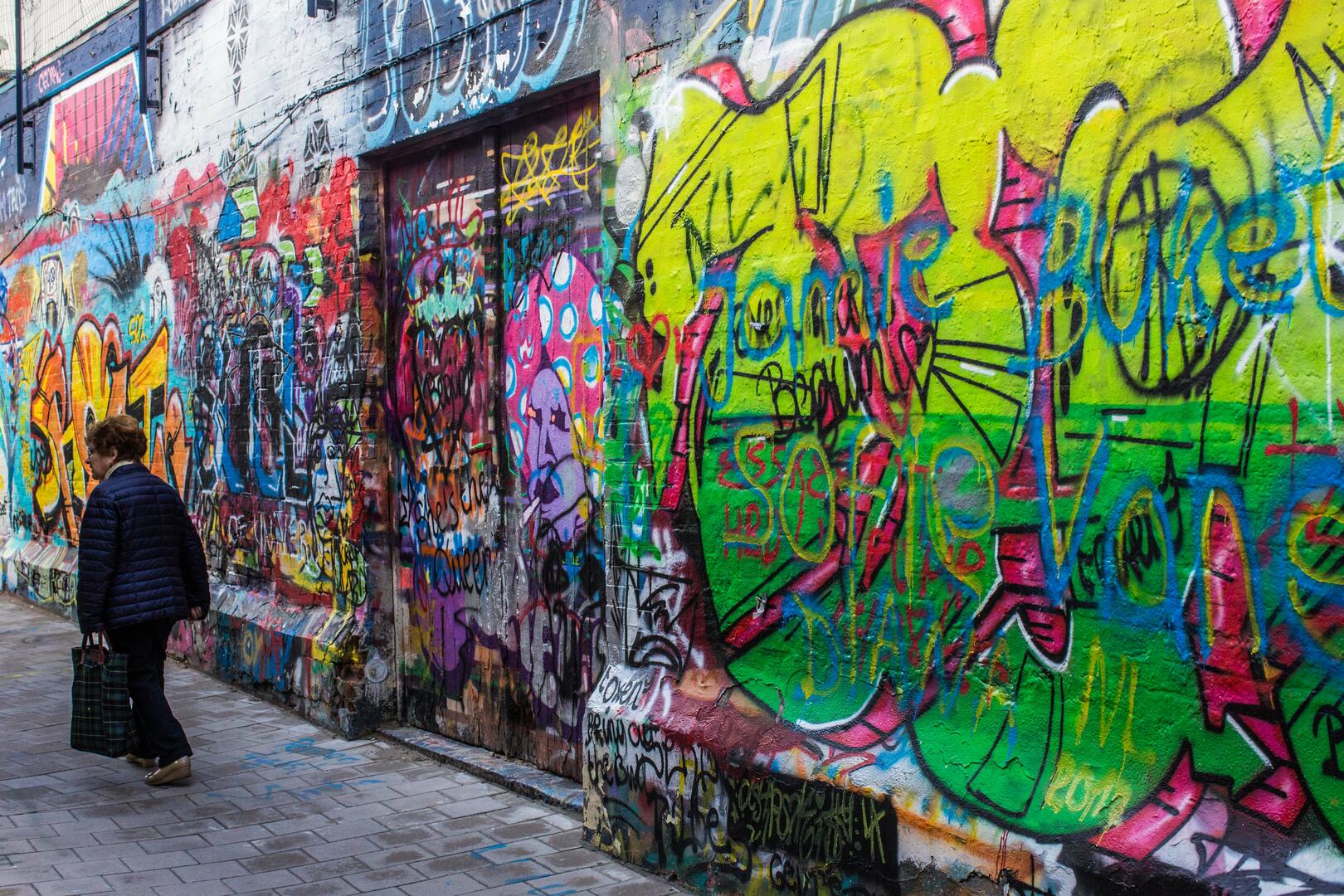
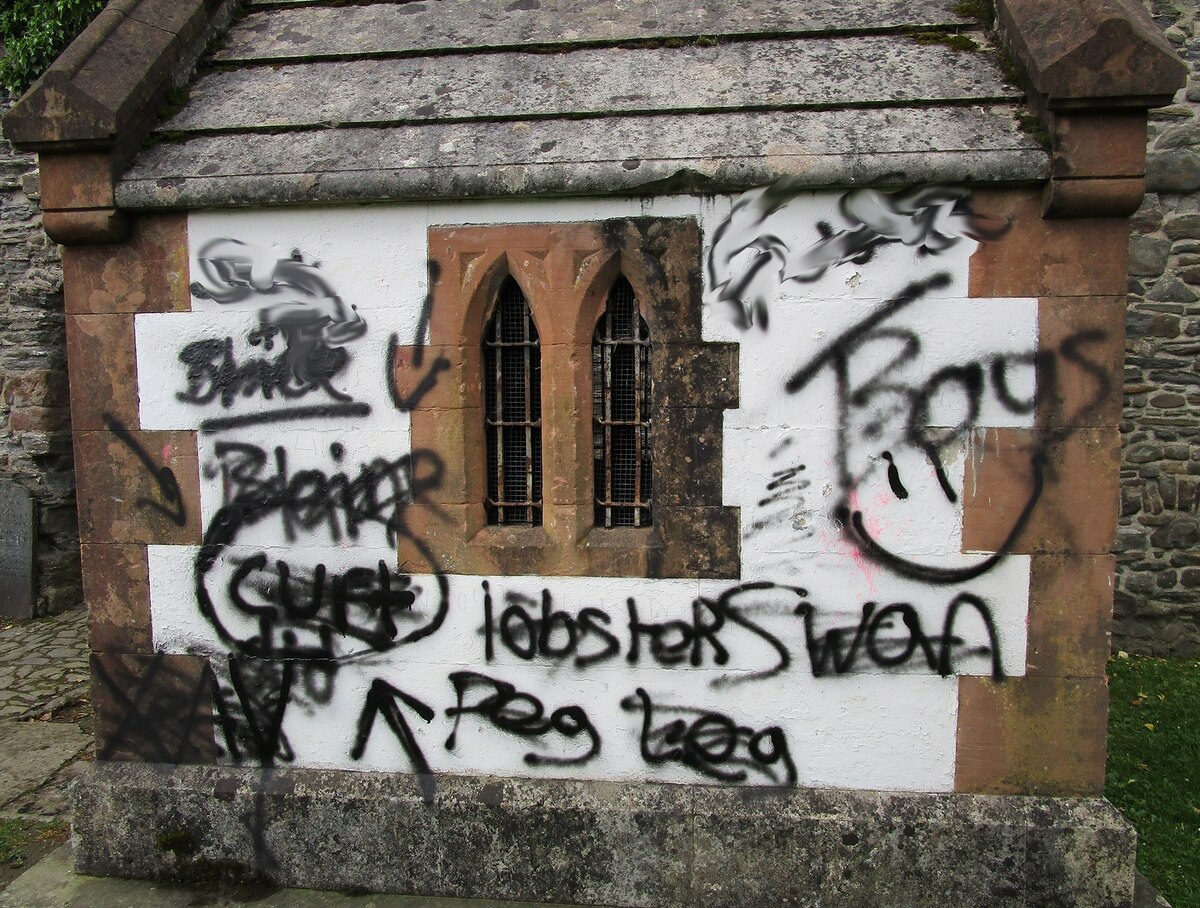
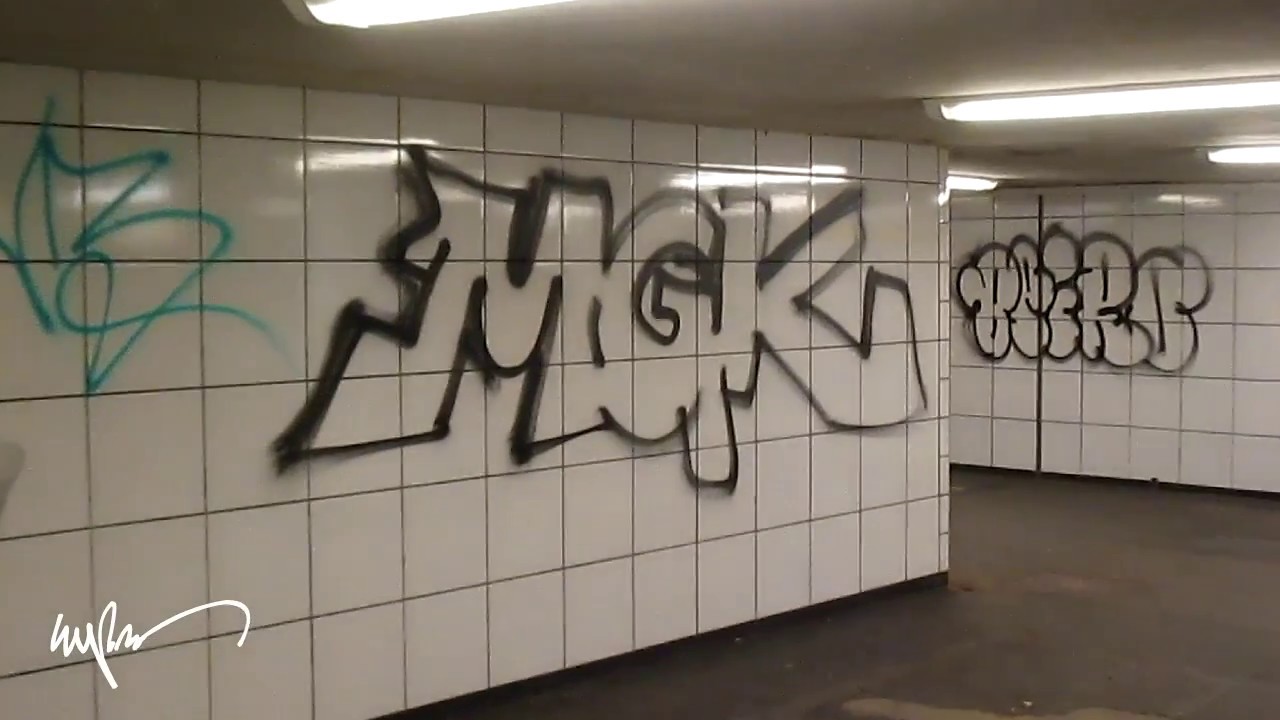
Over the last couple of decades graffiti has become a great problem particularly in the large agglomerations.
It appears almost everywhere - on the external walls of buildings, girders and piers of bridges, underground passages, facilities in parks and roads. About 80% of graffiti is written with paint and marking pens on large walls, very often on historical objects.
A considerable amount of money and time are spent annually on removing graffiti, City Councils have now begun to enforce regulations for keeping streets clean. According some of these regulations, not only the person who wrote the graffiti is responsible for damage, but also the owner of the building on which the graffiti was written and unattended for a prolonged period of time.
The traditional cleaning techniques are based on the use of a scalpel, abrasive dust, stream of fluid, or chemical agents. They may lead to the serious damage of the deeper layers of substrate.
Laser-Assisted Removal of Graffiti
Graffiti is one of the most immediate threats encountered on heritage monuments worldwide, and its cleaning is considered by the entities responsible for heritage protection as one of the most demanding conservation issues. The necessity of methods to completely extract the graffiti paints, safeguarding the original surfaces, was discussed in scientific projects focused on the optimization of cleaning methodologies, as well as on the development of protective anti-graffiti coatings.
Graffiti is, by its nature, a particular overlayer to remove because of the presence of pigments of different color and chemistry, and also because its penetration into the stone bulk is inevitable. Conventional cleaning methods, involving the use of chemical products and mechanical tools, do not completely remove the paint, and at the same time they can be rather aggressive to the stone surface. Lately, laser radiation has been evaluated as a feasible alternative tool for the elimination of graffiti due to its high precision and control during cleaning, as well as the possibility for automated cleaning processes. Recent studies have focused on the determination of optimum laser cleaning parameters and procedures for graffiti paint removal.

Graffiti Removal - Stop losing time and test out laser cleaning!
Laser cleaning is great for removing graffiti.
The laser will quickly heat up the paint layers, which then evaporate away. The substrate remains cool because of its higher ablation temperature, restoring the underlying stone, brick, steel or cement to it’s original glory. And there’s no waste to clean-up afterwards thanks to our HEPA air scrubber and HEPA vacuum system.
Grafitti clleaning : BEFORE and AFTER
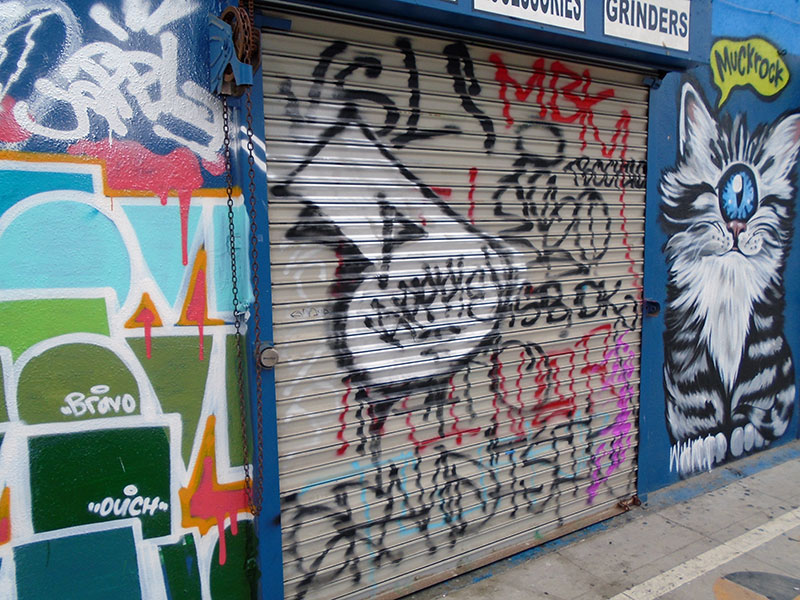
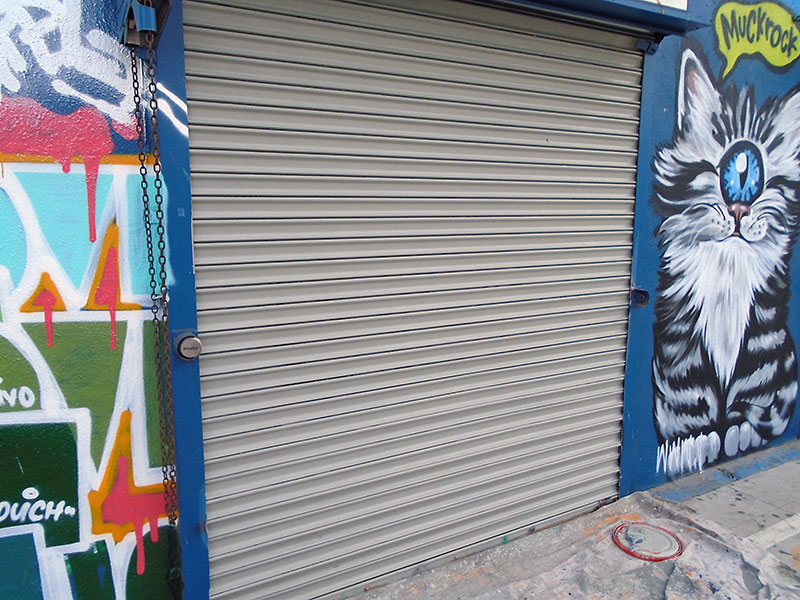
Do you want to find this "nice art" on your house tomorrow morning?
For Sure you do! We all love free "ART" and support this "famous artists" fully!!


Graffiti cleaning by laser
Quick and efficient result without efforts
Graffiti is often removed by using steam or chemicals. The disadvantage of these techniques is the fact that they’re not always as effective as they should. With other techniques, like sandblasting, there is a risk of damaging or wearing down the underlying layer. This forms a problem with softer stone types and historical buildings.
Laser cleaning is very suitable for removing graffiti. The laser beams will quickly heat up the paint layer, which then will evaporate. The underlying stone or concrete layer remains cool because of its higher ablation temperature. So the laser beams will have no effect on the underlying stone or plaster layer. Even on wood or glass, paint can be removed!
When using sufficiently powerful laser sources, the removal of graffiti goes very fast. Depending on the age, the color and the thickness of the paint layer, we are able to clean a square meter full of paint in less than half an hour with our heavy power cleaning lasers.
Graffiti removal is a substantial and underserved commercial market.
Municipal governments, transit authorities, property management companies, and private building owners spend billions annually on graffiti abatement. Most of them use high-pressure washing, chemical solvents, or paint-over approaches that are either ineffective on porous substrates, damaging to historic materials, or both.
Laser graffiti cleaning removes paint and spray paint from stone, brick, concrete, metal, glass, and painted surfaces without chemical solvents, abrasives, or secondary waste streams — and it does so selectively, removing the graffiti while leaving the substrate surface unchanged. For a graffiti removal business in 2026, the laser cleaning machine is the premium technology that justifies premium pricing, enables historic preservation clients who cannot accept conventional methods, and differentiates your service from the dozens of pressure-wash and solvent competitors in any market.
Thanks to its quick cleaning, laser cleaning is comparable or even better in price to the other techniques, but it has so much better results with a very high positive ecologic impact.

Why Laser Graffiti Cleaning Works — and Where It Has Limits?
The mechanism
Spray paint and marker graffiti on building surfaces consist of a polymer binder (acrylic or nitrocellulose) with pigment particles suspended in it. The binder has a decomposition temperature of approximately 250–400°C. At 1.064 nm fiber laser wavelength, the pigment absorbs laser energy more strongly than the substrate does — darker pigments absorb more strongly (black and red spray paint absorb 85–95% of incident 1,064 nm energy); lighter colors less so.
When the laser pulse heats the graffiti layer above the binder decomposition temperature, the polymer breaks down, and the pigment is ejected as fine particulate. The substrate surface, if the parameters are correctly calibrated, is heated only slightly — the energy is deposited primarily in the absorbing graffiti layer.
This selectivity is more reliable on some substrates than others:
Strong candidates for laser graffiti cleaning:
- Natural stone (granite, sandstone, limestone): Stone’s thermal mass and optical properties allow laser energy to stay primarily in the organic graffiti layer. Laser cleaning is the preferred method for historic stone facades where no other method is acceptable.
- Brick: Unglazed brick responds similarly to stone — the graffiti absorbs the laser; the substrate absorbs less.
- Metal (steel, aluminum, bronze, cast iron): Laser removes spray paint from metal substrates efficiently. This is essentially the same paint stripping application as automotive and industrial laser paint removal.
- Concrete (uncolored): Generally responds well; varies with aggregate composition and surface texture.
Challenging or unsuitable substrates for laser graffiti cleaning:
- Painted surfaces: If the substrate has a base coat that is also paint, the laser cannot reliably differentiate the graffiti layer from the base coat. Removing graffiti from a painted wall typically also removes some of the base coat beneath it — leaving a clean-but-discolored patch that requires repainting. For painted surfaces, solvent removal or paint-over is often more practical.
- Polished marble: The calcium carbonate in marble can recrystallize at laser energy levels high enough to remove graffiti — potentially permanently whitening or texturing the polished surface. Parameter development with expert consultation is required.
- Glazed tile and glass: High reflectivity and brittleness make these substrates risky without prior material-specific testing.
- White or very light-colored graffiti on light substrate: Low absorption differential; the laser cannot target the graffiti without targeting the substrate to nearly the same degree.
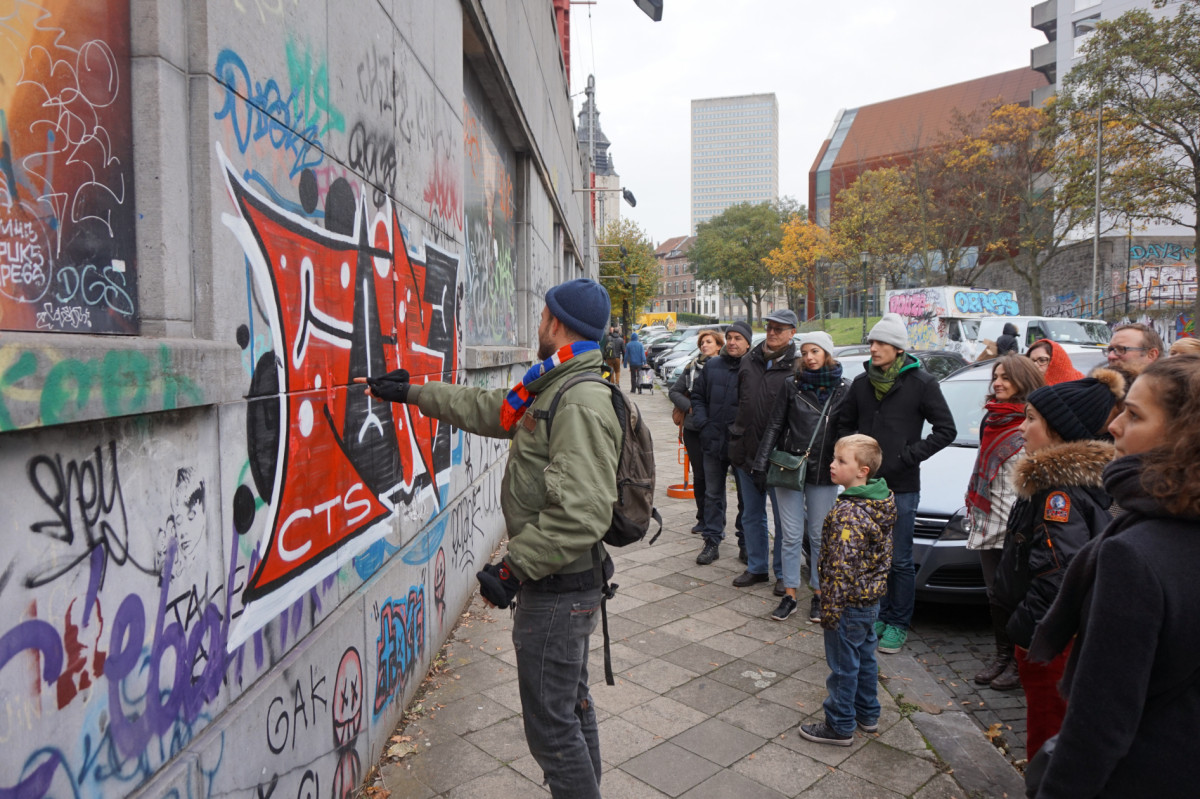
Advantages of graffiti removal by laser cleaning
- Eliminates the use of solvents (climate protection)
- Reduction of grinding and chemical cleaning resources
- Reducing noise in inhabited parts of cities
- Cost reduction
- High productivity of tools
- Reduction of the masking material
- The process can be used safely outdoor (for example masts) and in the locations where it’s not possible to use conventional methods
Graffiti Laser Cleaning Parameters by Substrate
Stone (granite, sandstone, limestone)
Stone substrates have low thermal conductivity (typically 1.5–3.5 W/(m·K) — 15–25× lower than steel). Heat does not dissipate quickly, requiring careful parameter selection to avoid discoloration of the stone surface.
- Granite: Dense, low porosity, high thermal mass. Accepts higher energy density than limestone. Recommended: 100–200W, 20–50 Hz pulse frequency, 50–100 ns pulse duration, 300–600 mm/s scan speed, 10–15 mm spot.
- Sandstone and limestone: More porous, more thermally sensitive. Recommended: 80–150W, 10–30 Hz, 20–50 ns, 400–700 mm/s, 12–20 mm spot. Avoid overly slow scan speeds — stone is less forgiving than steel when overheated.
- Test area requirement: Always test on an inconspicuous area of the stone before cleaning visible surfaces. The stone variety varies substantially within a single building — what works on one granite may discolor another. The test area is non-negotiable on historic stone.
Brick
Unglazed brick responds similarly to sandstone. Parameters between the sandstone and granite recommendations are appropriate. Be aware of repointing mortar in joints — mortar composition varies and may respond differently from the surrounding brick. Laser clean parallel to mortar joints where possible; reduce power near joints.
Metal surfaces (structural steel, cast iron, aluminum)
Metal graffiti removal is the most straightforward substrate category — it is essentially standard paint stripping with the same parameters as automotive and industrial paint removal. The laser cleaning machine guide parameters apply directly. Key consideration: if the metal has an existing protective coating (paint, powder coat) beneath the graffiti, distinguish clearly in your scope whether you are removing only the graffiti layer or all coating down to bare metal.
Concrete
Concrete graffiti removal is effective but requires higher average power than stone (concrete’s thermal mass and surface porosity absorb energy less efficiently). Parameters similar to granite but with 20–30% higher power. Warning: if the concrete has been previously coated with a transparent anti-graffiti coating (common on transit infrastructure), the anti-graffiti coating may need to be considered separately in the parameter selection.
